
She contracted polio in her native Argentina in 1941, when she was two years old, more than a decade before the polio vaccine was invented by Jonas Salk. As his body grew, so did his affected leg, but it never fully took hold. Polio left him with one leg that was shorter than the other, one leg that was shorter than the other. Also, that leg was not working properly; It didn’t actually work at all, instead acting like a kickstand. That’s because the virus damaged motor neurons in part of his spine, making the associated muscle fibers too weak to move the leg freely.
But we almost never think about what it’s like to live year after year, decade after decade, with the consequences of polio. Polio has permanent consequences that extend out over a lifetime, which a person experiences from the moment they become ill until the end of their life. Worldwide 20 million people have survived polio.
shoes everywhere
I really don’t know anything about the acute phase of my mother’s illness: how sick she was or how long she was hospitalized. I don’t know anything about her illness or what her grieving parents did to make sure she had the best outcome possible. All I know is that she was infected when she was a child and over the next twenty-plus years she went through several summer surgeries (so as not to miss school) and spent several months in a cast to recover.
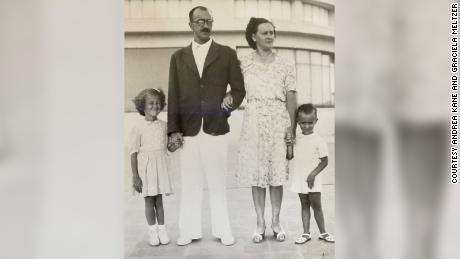
In addition to being small, his affected leg was full of scars. In photographs, she will try to position herself to obscure it as much as possible. He also had a long scar on his right leg, from where they removed a piece of his thigh bone in an attempt to make his legs even longer.
The shoes my mom had to wear were made to fit her uneven feet. The left shoe was small, and had a lift. But it wasn’t enough of the elevator to stop him from having an obvious limp. This disparity in the length of his legs eventually led to scoliosis, a curvature of his spine.
My mom had a different way of walking – she would move with all of her body weight on her good leg and then move her bad leg forward by rotating her hip, then she would momentarily shift her weight onto the bad leg and quickly Step forward again with your good foot. His bad foot acted like the foot of a wooden peg. It created a different CLIP-CLOP when she walked; My sister and I could hear him coming a mile away. We would, of course, make full use of that alert system for whatever prohibited activity we were engaged in and when we heard it in the hallway, whether we were doing our homework or sleeping soundly. She only ran—a skip-and-hop gallop—in real emergencies.

You’d think some of it—the surgery, the recovery, the scoliosis, the fact that one leg has to do all the work—would have been painful, but he never complained about anything except how messy our rooms were. My sister and I never heard of her condition or inability to participate in an activity; She never seemed disappointed. She was stubborn—a trait shared by many polio survivors; She just moved on, limp and all.
My mom ordered her shoes from Argentina, where an orthopedic surgeon had an exact mold for her feet. She wore shoes in one of two styles: Mary Janes and T-strap. At any given time, there may be two or three pairs of it in very small colors (black, grey, white or blue). When they’re completely worn out and separated, she’ll order one or two more. I remember they were very expensive.
She never got to wear pretty ballet flats, casual espadrilles, ugly-but-comfortable Birkenstocks, elegant riding boots—not even sneakers. Even if she’d got regular shoes in two different sizes, it wouldn’t have been comfortable—or maybe even possible—for her to walk. That means she never found a pair of “just because,” or chunky Doc Martens that made her feel like a street crook, or sexy pumps that made her feel like a movie star.

My sister and I never got to play dress-up with her shoes; We never dreamed that one day she would be borrowed for a dance or a date. And that was fine; We never knew it was something that little girls (and some little boys) did.
Silver Lining
Although my mother avoided the worst consequences of polio—death or the need for an iron lung—I’ve always wondered what her life would have been like if she hadn’t been infected. Would she still be married to my father – or have some other flamboyant, perhaps tall boyfriend? Would he have chosen a more exciting job at the United Nations than his secretarial position? Would she have been so busy living the glamorous life of a jet-setter that she didn’t wish to have children? Who among us knows what could have happened?
But I could reverse it: What did polio drive him to achieve? I like to think that being “different” inspired her—inspire her to settle thousands of miles away in New York City, away from Buenos Aires—and what would surely have become a more traditional life. Would she have chosen to give up the warm and secure embrace of her family and friends if she didn’t feel the need to prove, if only to herself, that she could make it on her own? Then again, there’s no way of knowing.

Still, I think it’s quite safe to say that polio had a profound and lasting impact on her life choices and her personality. Like many people with a visible disability, she hated being the center of attention of any kind (she would probably be embarrassed to learn that she was the subject of this article). Moreover, she always denied special privileges, especially if she considered them out of pity. A classic example: After living and driving for decades in New York City – where parking is both a blood game and a strategic game of chess – that he also applied for a disabled parking permit, and it was only because my father Insisted.
He also had a lifelong fear of doctors, hospitals, medical establishment. Even though she was probably too young to remember her early experiences with polio, the body remembers and retains these early horrific, shocking events. And despite he being a very dutiful and obedient patient, this underlying fear turned into white-coat hypertension and a racing heart so severe that a doctor had him wear a monitor for two weeks to make sure there was no underlying heart. Not a problem.
But polio also made him stronger. It sharpened his understanding of what is right and what is wrong, acceptable or not. This crystallized her goals, and, once in her crosshairs, she followed them methodically and with one-mindedness. It enabled him to endure big and small difficulties and disappointments through strong will. My sister and I never saw her flapping wings – she was always calm and composed.
Polio had a subtle effect on us, on his family as well. The vague rule was: protect her. While walking on the sidewalks of the city, my father always kept himself in a way that would protect him from unexpected obstacles from the passers-by. On the rare occasions when she took the subway, one of us would always stand behind her as she went up the stairs, one step at a time. A common warning my father gave us was, “Don’t tire your mother out.” We tried not to always do that – but it’s hard to rein in your childish desires when you’re young.
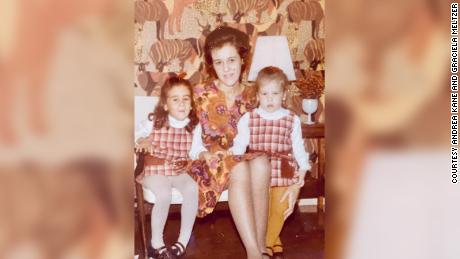
Her being limp meant she couldn’t really run around the playground or follow us, but I don’t think my sister or I ever noticed. As a family, we never did athletic or outdoor activities; We never went camping, hiking, bike riding or skiing. We didn’t even take long family walks in Central Park. But we did other family chores, like playing board games and cards, and when money wasn’t tight, we went to the theater or travel.
The Last Insult: Post-polio Syndrome
Although I don’t think polio tricked my mother into living a full and happy life, full of friends, family, and fulfillment, I do think it robbed her of her final years.
Like others who got PPS, she began to experience muscle weakness and fatigue. Her leg would suddenly drop and she would go downstairs – in the apartment, on the street, anywhere. While horrified, we were lucky that he never broke a bone or broke his head, but there were many close calls and lots of ugly wounds. Eventually she started wearing the brace.
Researchers aren’t sure what causes PPS, but the best guess is that after the initial infection, where patients may lose up to 70 percent of their motor nerve cells, surviving muscle fibers connect to the still-functioning motor nerves. are, allowing the patient to function. But eventually those motor nerves – which have been working twice as hard for decades – get tired and tired. People with PPS can go from being fairly independent to needing a lot of help.
My father was right that we don’t want us to wear that. We didn’t know it at the time, but his strength and mobility had an expiration date.
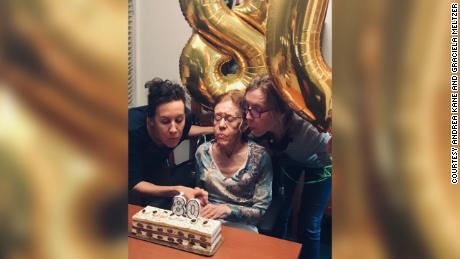
My mom also developed Parkinson’s disease, so in essence she had a movement disorder on top of movement issues. This made her incredibly unstable and she fell over and over again. Eventually she moved from using a cane to a walker, to a wheelchair.
While exercise is important for delaying the progression of Parkinson’s disease, it is not so much for people with PPS. In fact, the motto with PPS is “preserve to preserve”—that is, conserve your energy to preserve your work. PPS requires polio survivors to avoid chronic overuse of their muscles—something their bodies necessarily did every single day of their lives—in order to stay operational.
It turns out that exercise is also good for preventing dementia, as shown by study after study. Was polio, which prevented my mother from exercising in the traditional sense, a contributing factor to her dementia? Had Parkinson’s? Was it an unfortunate combination of the two? Again, the answer is unknown. (One saving grace of polio on this condition is that my mother was unable to move around on her own – a frequent occurrence among dementia patients.)
In the last six months of her life, my mother no longer had any need for specially made shoes that allowed her to move forward in life, both literally and figuratively. When she died, my sister and I carefully chose a couple to reminisce. The shoes represent his strength, his achievements, his life. The shoes are his.
Graciela Meltzer contributed memories to this story.
(This story has not been edited by seemayo staff and is published from a rss feed)